Different Types of Massage and How to Choose
Author
Anna
Reading a massage menu for the first time, it is hard to tell what separates "classic" from "sports", or why lymphatic drainage exists at all. Yet the choice decides everything: pressure, sensation, how you feel afterwards. Here are the main types of massage and which one to book for a given goal.
The short version
Go by your request, not by the name. There are usually three:
- unwind and shake off general fatigue — classic massage;
- deal with one specific area — targeted back, neck or leg massage;
- solve a practical task — recovery after training, or fluid retention.
Full body classic massage
The baseline and the best entry point. Medium pressure, work across the whole body from feet to neck, familiar techniques: gliding strokes, kneading, friction. The goal is to bring muscles back to healthy tone and release accumulated tension.
Who it is for: anyone unsure where to start, or in need of exhaling after a dense week. A full body massage also reveals where your body holds the most tension, so the therapist can tell you what to focus on next.
Sports massage
Deeper, more intense work with the muscles. There is no aim to send you to sleep here: the point is to help muscles recover after load, release spasm and restore elasticity. It feels firm, at times right on the edge — that is normal for the format.
Who it is for: people who train, walk a lot or work physically. More on the sports massage page.
Lymphatic drainage massage
The exact opposite of sports work: the lightest pressure of all techniques. Slow movements along the lymph pathways help the body clear excess fluid. The result is less swelling and a feeling of lightness.
Who it is for: puffiness, heavy legs, after flights and in hot weather. Details on the lymphatic drainage massage page.
Targeted formats
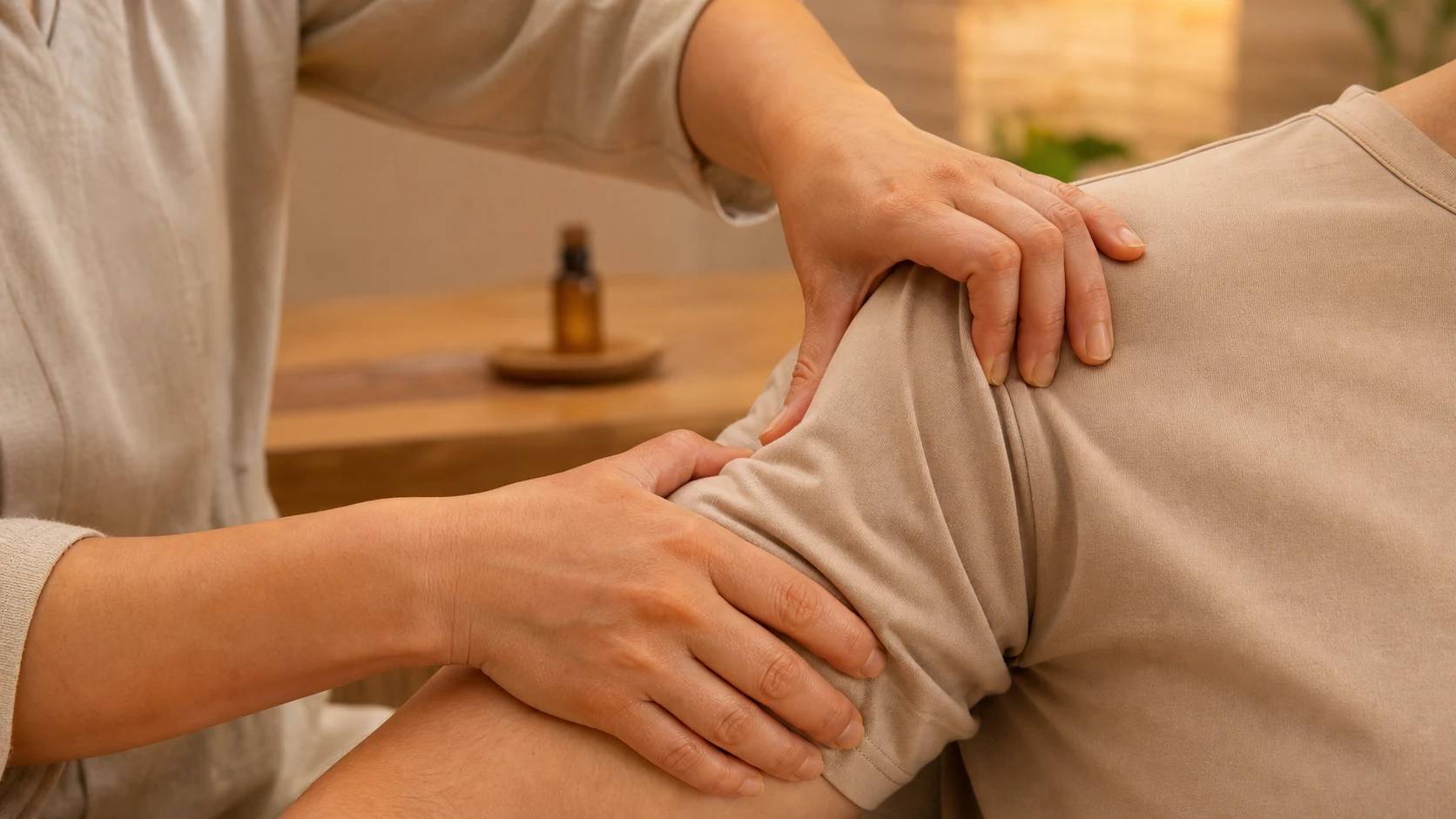
When one spot aches and tightens, an hour over the whole body is not the point — focused work is:
- Back massage — lower back, the whole back, the legacy of desk work.
- Neck, shoulder and head massage — neck and shoulder tension, a heavy head by evening.
- Leg and foot massage — tired, heavy legs after a day on your feet.
Thai massage
Its own tradition: the therapist uses not only hands but forearms, elbows and body weight, and part of the session is assisted stretching in comfortable positions. No oil, often on a mat. It feels like deep bodywork and a stretching session rolled into one.
Who it is for: anyone who wants something deeper and more active than the classic format. We are adding Thai massage as its own service — it is one of the most in-demand formats in Batumi.
One table to compare
| Type | Pressure | Goal | How it feels |
|---|---|---|---|
| Classic | Medium | Relaxation, tone | Pleasant |
| Sports | Deep | Muscle recovery | Firm |
| Lymphatic drainage | Light | Swelling, fluid | Steady, soothing |
| Targeted (back, neck, legs) | Medium to deep | One area, in focus | Varies |
| Thai | Deep + stretching | Mobility, tone | Active |
Things to keep in mind
- First time — take a full body classic massage and narrow it down later.
- Specific pain — a targeted format, but see a doctor first if the pain is constant.
- You dislike strong pressure — say so before you start: intensity is adjustable in any format.
- You want it to last — plan a course rather than a single session.
There is no universally best type of massage — only the one that fits this week's goal. Tell your therapist what bothers you and what you are after, and the format picks itself.