Benefits of Massage: What It Does for Your Body
Author
Anna
It is easy to file massage under "nice weekend treat", but the payoff is far more practical than that. One hour on the table changes how you hold your back, how you fall asleep and how heavy you feel at the end of the day. Here is what the benefits of massage actually come down to — no miracle promises.
What happens in an hour on the table
The therapist works with soft tissue: warming the muscles up, releasing tight spots, helping them return to normal tone. The nervous system joins in — breathing deepens, the pulse settles, the body steps out of permanent alert mode. That is why the feeling afterwards is not only "worked out" but also "let go".
One thing to be clear about: massage is about wellbeing, care and prevention, not about treating diagnoses. With persistent pain, an injury or a chronic condition, see a doctor first and use massage as support.
Muscles, posture and mobility
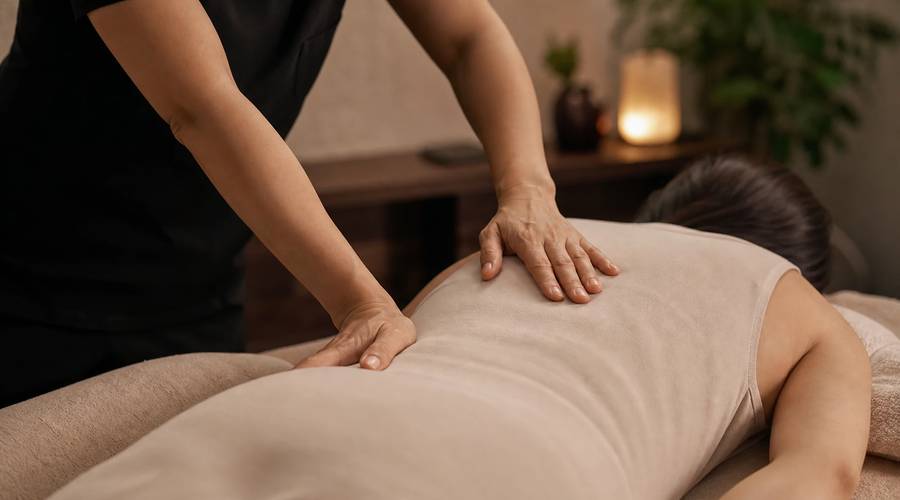
The most obvious benefit. Desk work, driving, phone, a bag on one shoulder — and your shoulders ride up, the neck pushes forward, the lower back takes the load. Regular hands-on work restores elasticity, releases that "concrete back" feeling and makes movement easier.
- stiffness in the neck and between the shoulder blades eases;
- the lower back stops aching by the evening;
- holding your back upright takes no effort.
For that, people book a back massage or a neck, shoulder and head massage — targeted work on the problem area.
Circulation and lymph flow
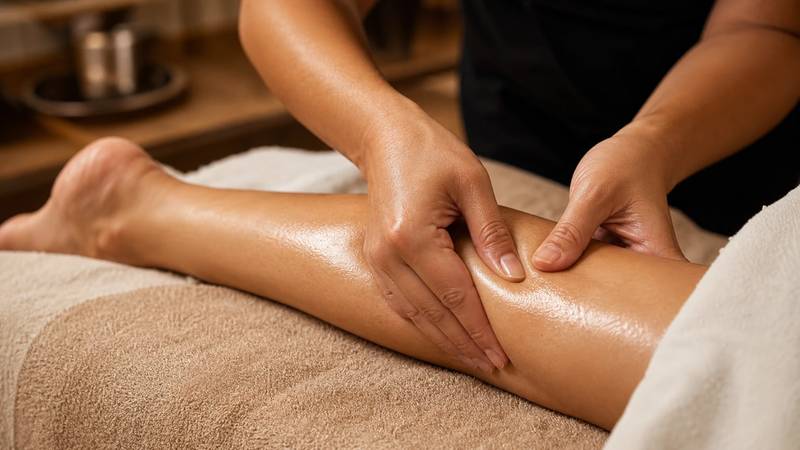
Warming the tissue improves blood flow: muscles get more oxygen, metabolic by-products clear faster. Hence that familiar warmth and lightness afterwards. Lymph is a separate story: the gentle technique of lymphatic drainage massage helps the body deal with excess fluid, while the evening heaviness after a day on your feet responds well to a leg and foot massage.
Sleep, stress and a clearer head
Part of the effect has nothing to do with muscles. Massage switches the body into a calmer mode: falling asleep gets easier and background irritability drops noticeably. Working the head and neck is especially good at releasing the tension that by evening turns into a heavy, pressed-in head.
Targeted or full body: which to choose
| Goal | Format | What you get |
|---|---|---|
| General fatigue, stress | Full body massage | Relaxation, tone, a reset |
| One tight area | Back, or neck and head massage | Focused work on tension |
| Swelling, heaviness | Lymphatic drainage massage | Lightness, help with fluid retention |
| Training load | Sports massage | Muscle recovery after workouts |
If you are not sure, start with a full body massage: the therapist will see where the tension really sits and suggest what to focus on next time.
How often to book
A one-off session feels good, but the effect builds with regularity. A working guideline: once every one or two weeks with desk work and stress, or a course of 5–10 sessions for something specific like constant neck tension. Between courses, a maintenance session once a month is enough.
When to be careful
Massage is not done with a fever, acute inflammation, fresh injuries, flare-ups of skin conditions and a number of other states. Pregnancy, varicose veins, high blood pressure or recent surgery are not automatic no-gos, but they are a reason to talk it through with your therapist before the session and, if needed, with your doctor.
Massage is one of the simplest ways to get your body back to feeling normal: no products, no complicated procedures, one hour. In Batumi, where a day slips by between work, traffic and the sea, that hour is often all it takes to feel the difference.