What Is Lymphatic Drainage Massage?
Author
Anna
"Lymphatic drainage" sounds like something from a clinic, which is why there is so much confusion around it: some expect weight loss, others expect deep muscle work. In reality it is the gentlest of all massage techniques. Here is what a lymph massage actually is, how a session goes and what it is good for.
What is a lymph massage
Lymph is a fluid that moves through its own network of vessels and helps carry away excess water and metabolic by-products. It has no pump of its own: it moves thanks to breathing, muscle movement and tissue pressure. Spend the day sitting — or the opposite, entirely on your feet — and that flow slows down, which is where swelling, heavy legs and a puffy feeling by the evening come from.
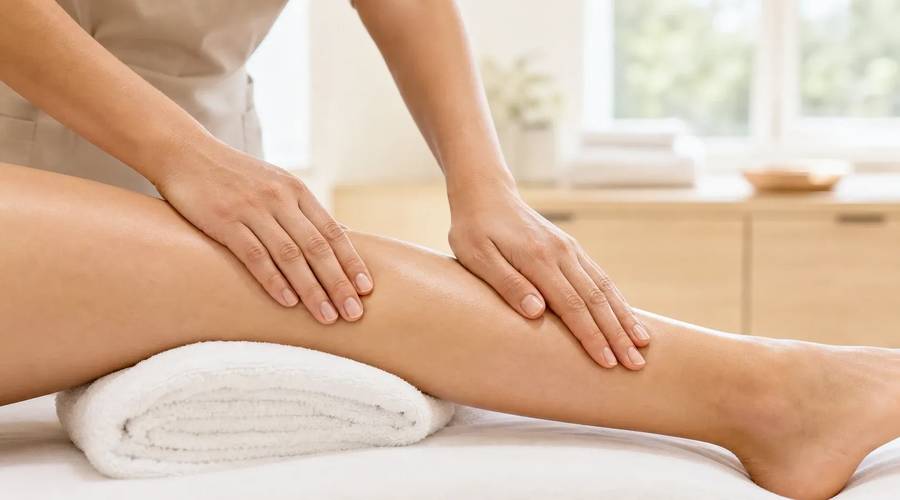
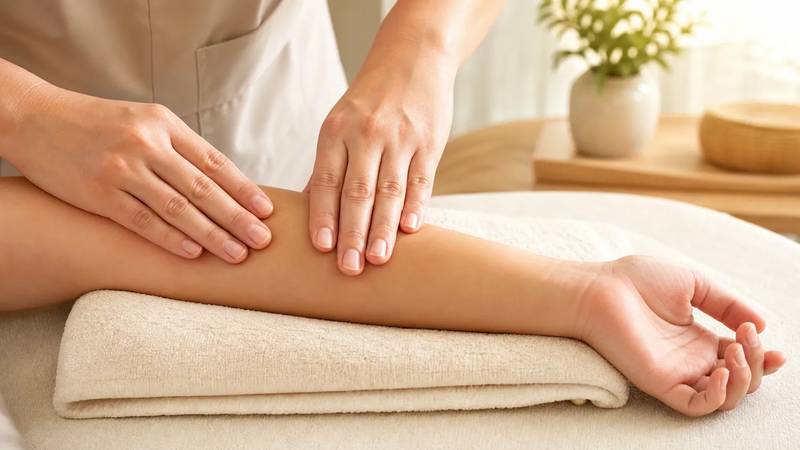
Lymphatic drainage massage is a soft manual technique that helps lymph move in its natural direction: slow strokes and light rhythmic pressure along the lymph pathways, towards the lymph nodes. There is no "grit your teeth" part here, and there should not be.
How a session works
A lymphatic drainage massage at the salon runs for an hour. The therapist works the whole body or one requested area — most often the legs and abdomen, sometimes arms and face. The movements are slow, superficial and always in one direction. Many people drift off during it: the session feels steadily pleasant rather than energising.
What to do after lymphatic drainage massage
Drink water, keep moving lightly through the day and skip the gym that evening — the body locks in the effect better in a calm mode. Heavy salty food right after a session works against the point of it.
The benefits
- Less swelling. The most visible effect: heavy legs and morning puffiness ease off.
- A feeling of lightness. The body feels mobile again and clothes sit more freely.
- Support after travel and heat. Long flights, hot weather, too much salt and too little movement — the classic scenario where lymph work helps.
- Relaxation. The gentle rhythm calms the nervous system as much as a classic massage does.
Worth being clear about: this is not a weight-loss method and not a treatment. Measurements can drop visually thanks to the fluid that leaves, but the technique does nothing to fat tissue. Persistent, pronounced swelling is a reason to see a doctor rather than book more sessions.
How it differs from other massage types
| Lymphatic drainage | Classic | Sports | |
|---|---|---|---|
| Pressure | Light, superficial | Medium | Deep |
| Goal | Fluid retention, swelling | Relaxation, tone | Muscle recovery |
| How it feels | Steady and soothing | Pleasant, sometimes firm | Firm, at times intense |
If the request is "work out my tight back", that is not lymph work but a full body massage or targeted work on the area.
How often to book
A single session helps, but briefly — for a few days. A practical schedule: a course of 8–10 sessions two to three times a week for a pronounced concern, then maintenance every one or two weeks. For seasonal swelling — heat, salty food, a long flight — a few sessions in a row are enough.
Contraindications
Lymphatic drainage is the softest massage there is, yet its list of limits is no shorter:
- fever, acute infections and inflammation;
- cancer and diseases of the lymphatic system;
- thrombosis, thrombophlebitis, serious heart or kidney conditions;
- skin problems in the area being worked on;
- pregnancy — only after clearing it with your doctor.
Anything you are unsure about goes to your therapist before the session starts — that is a normal part of the prep, not a formality.
Lymphatic drainage massage does one specific job well: taking the swelling down and giving the body its lightness back. In Batumi, with its heat and long days on your feet, that difference is obvious after the very first hour.