Types of Facial Peels: Which to Choose

Author
Ruslana
"Peel" sounds intimidating, but at its core it's a controlled renewal of the skin: we help it shed spent cells faster so the surface becomes smoother and fresher. There are many formats and plenty of confusion. Let's break down the main types of facial peels and how they differ by mechanism, depth and sensation.
Why a peel is needed
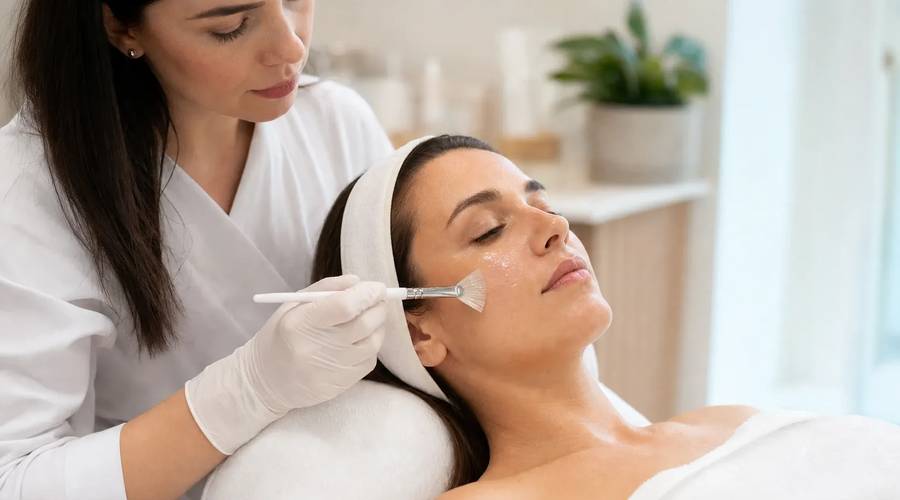
Over time skin renewal slows, dead cells linger on the surface — the tone goes dull, the texture uneven, the pores more noticeable. A peel speeds up this natural process. It supports a groomed look and pairs well with other procedures — for example, an in-salon facial peel, where the formula and concentration are matched to your specific skin.
Let's be clear up front: a peel is about care and aesthetics, not treating skin conditions. The goal is renewal and an even tone, not a medical result.
Types of peels by mechanism
Enzyme
The gentlest option. It works via enzymes that delicately dissolve the bonds between dead cells. It barely irritates, suits sensitive skin and is a good first introduction to peels.
Chemical
The largest group. Here acids are used — AHAs (glycolic, lactic), BHA (salicylic) and others. They exfoliate the skin and stimulate its renewal. It's the chemical peel people usually mean when they talk about the procedure in general.
Mechanical
Physical exfoliation — scrubs, resurfacing. In home care these are gentle gommages; in the salon, more serious methods. It has nothing to do with "acid" peels but also counts as surface renewal.
Types of peels by depth
This is probably the key classification.
| Type | Depth | Effect | Recovery |
|---|---|---|---|
| Superficial | Top layer of skin | Freshness, even tone, glow | Minimal, skin recovers quickly |
| Medium | Deeper, into the mid layers | More pronounced texture renewal | Noticeable recovery, peeling |
| Deep | Maximum depth | Serious transformation | Long recovery, specialist only |
For most beauty-care goals a superficial peel is enough: it gives a feeling of freshness without disrupting your usual rhythm of life. A medium peel is brought in when texture needs more noticeable work, and it's done in courses under a specialist's supervision. Deep peels are a separate story, approached with care.
How to choose for your skin
- Sensitive skin, first time — an enzyme or mild superficial peel.
- Oily skin, enlarged pores — chemical peels based on salicylic acid often feel more logical.
- Dull tone, uneven texture — a course of superficial AHA peels.
- Want a more pronounced result — discuss a medium option with a specialist, but be ready for a recovery period.
When it's best done
Season matters. Active acid peels are traditionally done during periods of lower sun activity, because afterward the skin is more sensitive to UV. In sunny Batumi this is especially important: SPF after a peel isn't a recommendation but a must.
Aftercare
- daily sunscreen;
- gentle hydration and restorative products;
- a pause on other acids and scrubs;
- no DIY steaming or harsh cleansing for the first few days.
A peel works not as a one-off but as a course and in tandem with sensible home care. Approached wisely, the skin responds with an even tone, pleasant smoothness and that "rested" look the whole thing is done for.