Biorevitalization: What It Is and Which Products
Author
Ruslana
Skin loses moisture imperceptibly: first that "glow" fades, then a feeling of dryness and tightness appears, and the tone grows duller. Biorevitalization is a procedure that works on exactly this, returning hydration to the skin from within. Let's break down in plain terms what it is, which products are used and how a course is built.
What biorevitalization is
Biorevitalization is the introduction of hyaluronic acid-based products into the skin via micro-injections. Hyaluronic acid is a natural component of the skin that holds moisture. With age and under the influence of sun, wind and dry air, there's less of it, and the skin looks more tired.
The procedure saturates the skin with this substance point by point, helping it hold moisture better. It's about hydration, tone and a groomed look — aesthetic care, not treatment.
If the idea of deep hydration appeals to you, it's worth starting with a biorevitalization consultation: the specialist assesses your skin's condition and advises whether the procedure suits you and what course makes sense.
How it differs from fillers
People often confuse biorevitalization with fillers, since both use hyaluronic acid. The difference is in the goal.
| Parameter | Biorevitalization | Fillers (lip/contour) |
|---|---|---|
| Goal | Hydration, skin quality | Shape and volume correction |
| Product | Fluid, non-stabilised hyaluronic acid | Dense, stabilised filler |
| Result | Freshness, tone, smoothness | Change of contour and volume |
| Format | Usually a course of sessions | Often one-off with maintenance |
Put simply, fillers change shape, while biorevitalization improves the condition and hydration of the skin.
Which products are used
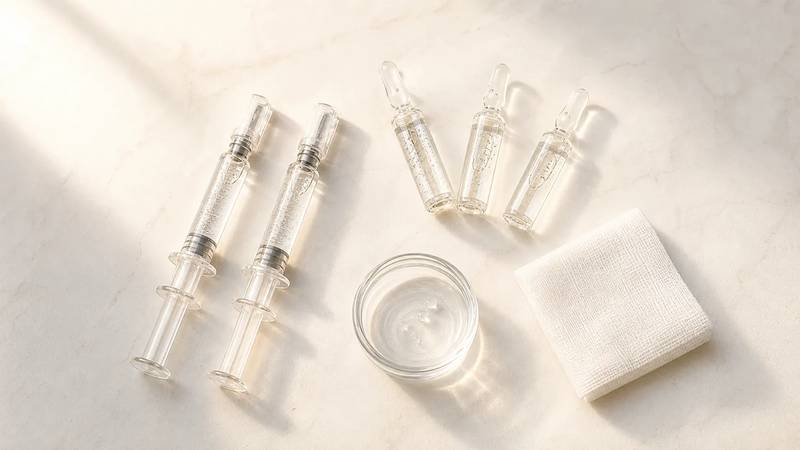
Biorevitalization products differ in concentration and composition:
- Pure hyaluronic acid of various concentrations — the base option for hydration.
- Combined cocktails — hyaluronic acid with added vitamins, amino acids and antioxidants for all-round skin support.
- Products of different densities — chosen for the zone and the task.
There are many ranges on the market — for example, brands like Juvederm or Filorga have products for skin hydration. Treat these as examples, not the only right choice: the specific product is chosen by the specialist at the consultation, based on skin condition, age and your wishes. There's no universal "best" product — what matters is the fit to your situation.
How the procedure goes
- Consultation and assessment of the skin.
- Cleansing and numbing — usually a numbing cream.
- Micro-injections across the whole zone: the product is placed point by point with a fine needle.
- Soothing care and recommendations.
Right after, small papules — tiny bumps at the injection sites — may be visible. That's normal: they settle within a few hours or days. Light redness and sensitivity are possible.
The course and the result
Biorevitalization usually works as a course of several sessions a couple of weeks apart — that way the effect builds up and lasts longer. A single treatment also gives freshness, but for a stable result a course with follow-up maintenance is more logical.
After the procedure the skin most often looks more nourished and rested, with a more even tone. How pronounced the effect is depends on the individual — the starting condition of the skin, lifestyle and care. It's a guideline, not a promise of a specific result.
Aftercare
- for the first few days don't touch the skin with your hands or apply harsh products;
- skip the sauna, steam room and intense sport for a couple of days;
- always use SPF — in sunny Batumi, skin fresh from injections especially needs protection;
- keep up hydration and drink enough water.
Who it suits
Biorevitalization is most often chosen when the skin looks dehydrated, dull and tired and you want to restore its freshness without changing the shape of the face. As with any injections, there are conditions for which the procedure is postponed — so a consultation beforehand is a must.
The main value of biorevitalization is in regularity and a sensible approach. It's about caring for skin quality over the long term, not an instant transformation.