Balayage vs Ombre vs Shatush: The Difference

Author
Valeria
Balayage vs ombre — plus shatush — three techniques people constantly confuse and sometimes use as synonyms. In reality they're different ways of stretching colour down the length, and the results are noticeably different. Let's break down the differences between balayage, shatush and ombre calmly and clearly, so you walk into the salon with a ready request rather than a vague "I want it like the photo."
Balayage vs ombre vs shatush: what's the difference
One thing unites these techniques — they all create a soft stretch of colour from darker roots to lighter ends, with no harsh regrowth line. They differ in how the stylist applies the lightener and what pattern comes out in the end.
If you'd rather leave the choice to a colourist, at Trueman it's part of the highlights and balayage service — at the consultation the stylist looks at your base and picks the right technique for your texture and length.
Balayage
Balayage (from the French "to sweep") is a freehand painting of the strands. The stylist applies lightener with a brush across the surface, keeping away from the roots, and stretches it toward the ends. The result is a natural, sun-kissed effect with soft highlights. Balayage sits well on both straight and wavy hair, suits any length and barely needs a clean regrowth line.
Shatush
Shatush is a technique of soft stretching on backcombed strands. The stylist lightly backcombs the hair, which makes the lightening border especially blurred and smooth. The result looks as natural as possible, as if the hair simply faded a little in the sun. Shatush usually touches a smaller volume of hair than classic highlights and works well on medium and long hair.
Ombre
Ombre is a horizontal stretch: a dark top and a noticeably lighter bottom with a pronounced transition in the mid zone. Unlike balayage and shatush, ombre's transition is more contrasty and "reads" as a separate zone. There are variations too — sombre (soft ombre) with a less pronounced border.
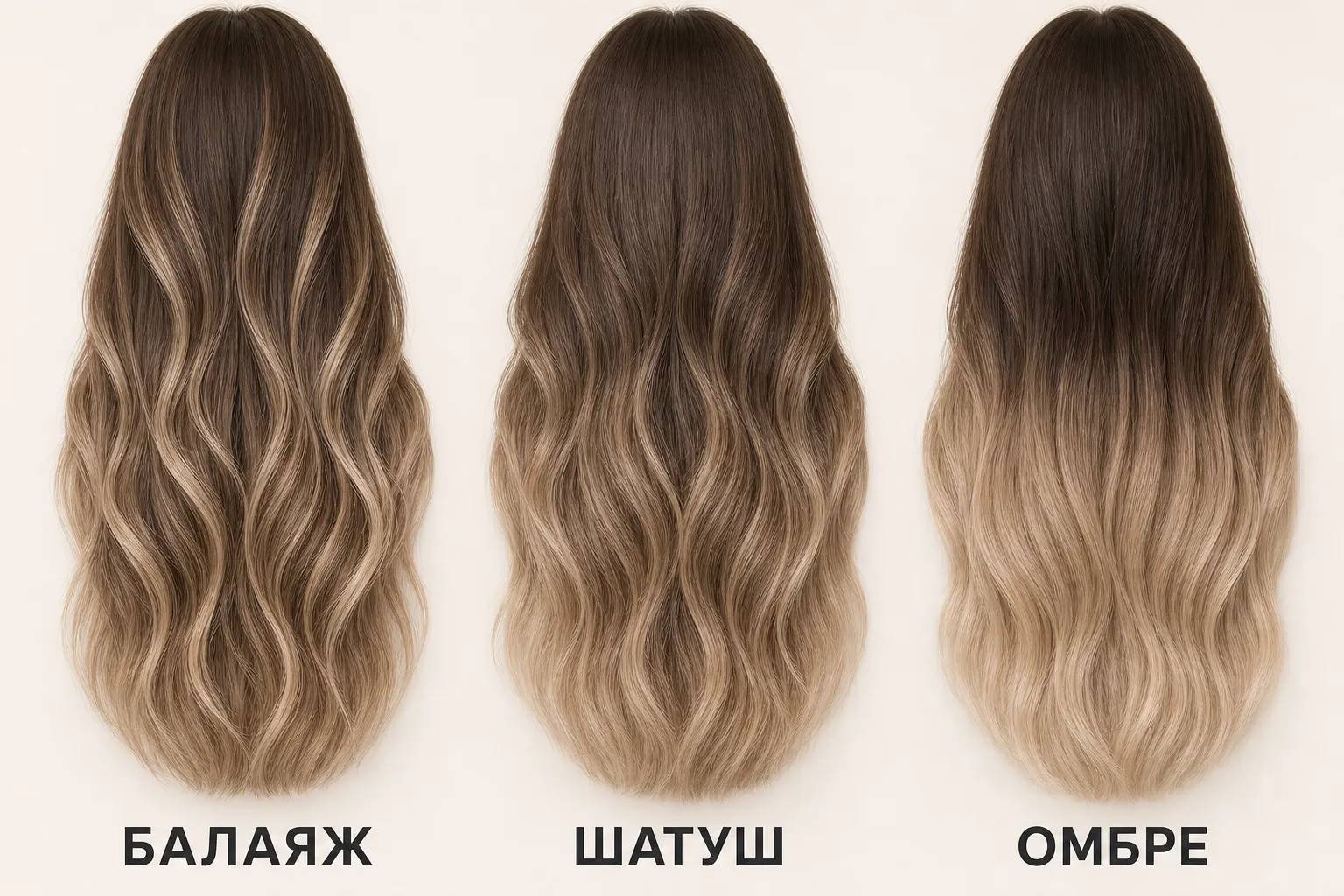
Technique comparison table
| Criterion | Balayage | Shatush | Ombre |
|---|---|---|---|
| Application | Freehand brush painting | Stretch on backcombing | Horizontal stretch by zone |
| Colour transition | Soft, vertical highlights | As blurred as possible | More contrasty, visible border |
| Naturalness | High | Very high | Medium, decorative effect |
| Amount of lightening | Medium | Small | Medium–large on the length |
| Hair length | Any | Medium and long | Medium and long |
| Regrowth | Invisible | Invisible | More visible due to the border |
What to choose for your goal
If you want a fresh but natural look and minimal upkeep as it grows out — look toward balayage. If you want the colour to go unnoticed entirely and read like natural sun-lightening — that's shatush. And if you like a pronounced play of dark and light, a "two-colour" effect — that's ombre.
One important point: all three techniques involve lightening, which means the result depends on your starting colour and hair condition. On a dark base, highlights and colour stretches may need several sessions to reach a clean tone with no brassiness. Dark and damaged hair lightens more cautiously and slowly.
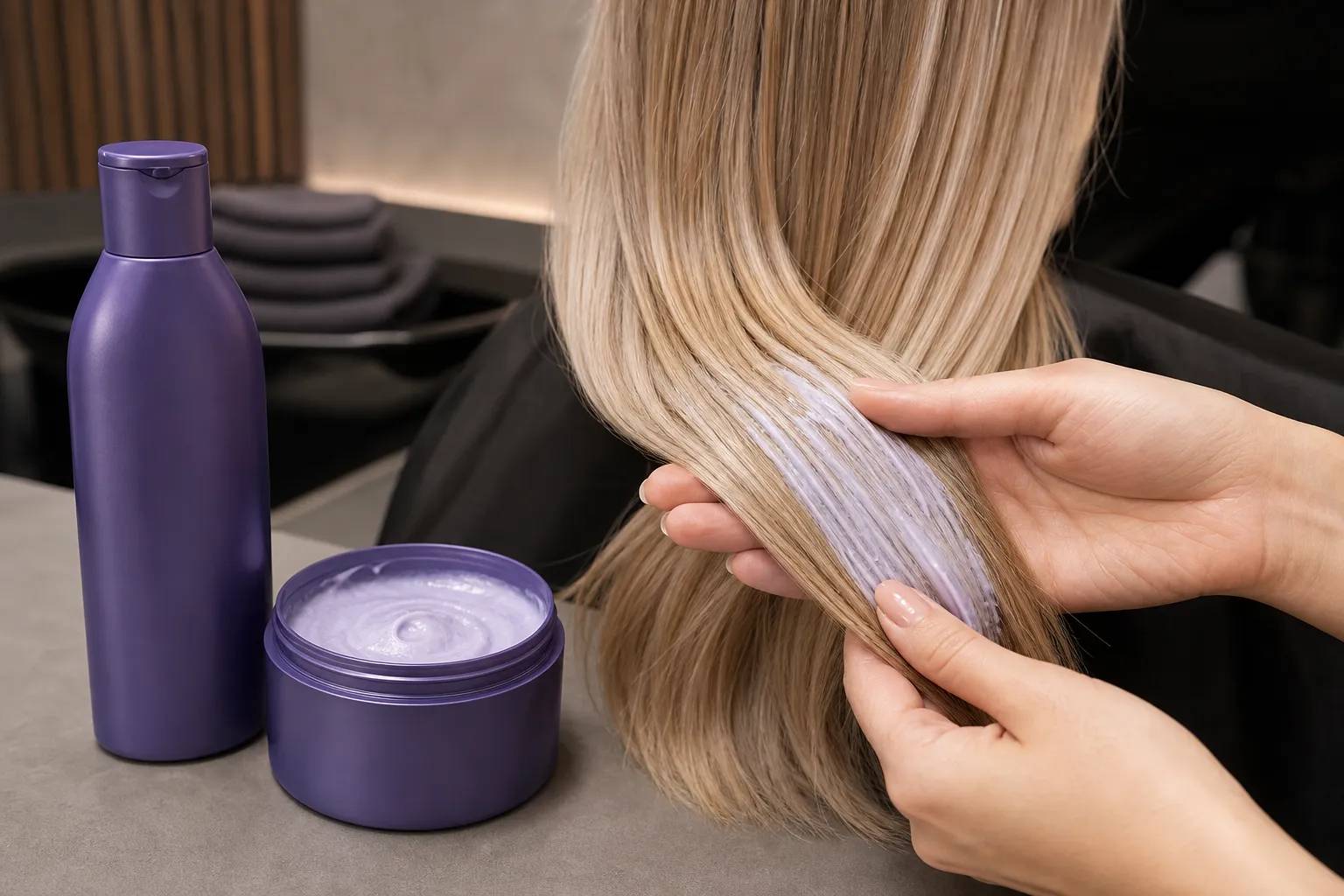
Aftercare for a colour stretch
Any of these techniques lasts longer with the right care. Use shampoo and a mask for coloured hair, and once a week a toning treatment (a purple conditioner to fight brassiness on light ends); don't over-dry the length with a blow-dryer or flat iron without heat protection. The upside of colour stretches is that the roots don't need touching up every month — a refresh is usually needed every 3–4 months.
If you're torn between techniques, that's normal. Come in for a consultation: seeing your length, density and base colour in person, the stylist will suggest which option gives the exact result you have in mind.