Perm Hair: Types, Formulas and Care

Author
Valeria
Perm hair is making a comeback — but not the perm our mums had. Modern formulas are gentler, the curls look more natural, and there are more options: from soft waves to springy curls and root volume. Let's break down the types of perm hair, how they differ and how to care for the result so the curls delight rather than disappoint.
Perm hair: how it works
The essence of any perm is that the formula softens the hair's inner structure, the hair is shaped on rods or rollers, and then it's fixed. The hair "remembers" the new shape and holds it for months. The types of perm differ mainly in the strength of the formula and how long the result lasts.
It's a procedure where the stylist's experience and the right formula for your hair structure matter. At Trueman it's done as part of the perm service — with a prior assessment of the length's condition.
Classic perm
The most durable option. It uses stronger formulas and gives springy, defined curls that last up to six months. It suits anyone wanting pronounced curls for the long haul. The downside — it's a real stress on the hair, so on bleached or damaged length a classic perm is done cautiously or not at all.
Bio perm
Bio perm is the gentler alternative. The formulas here are milder, often with added protein components, so the hair suffers less. The curls come out more natural and soft and last 2–4 months. A sensible choice for anyone trying a perm for the first time or protecting hair quality.
Wave perm (beach waves)
Wave perm is a trendy, light perm that creates the effect of messy beach waves rather than tight curls. The hair is wound on large rollers, and the result is relaxed and natural. A great option for anyone tired of curling with an iron every morning but not after defined curls.
Root volume
A separate task is root volume. Here the formula is applied only to the root zone to lift the hair at the base. The length stays straight, and the hair stops clinging to the head. Ideal for fine hair that lacks fullness. When more heat-shaped, defined curls are the goal, a stylist may suggest a digital perm instead.
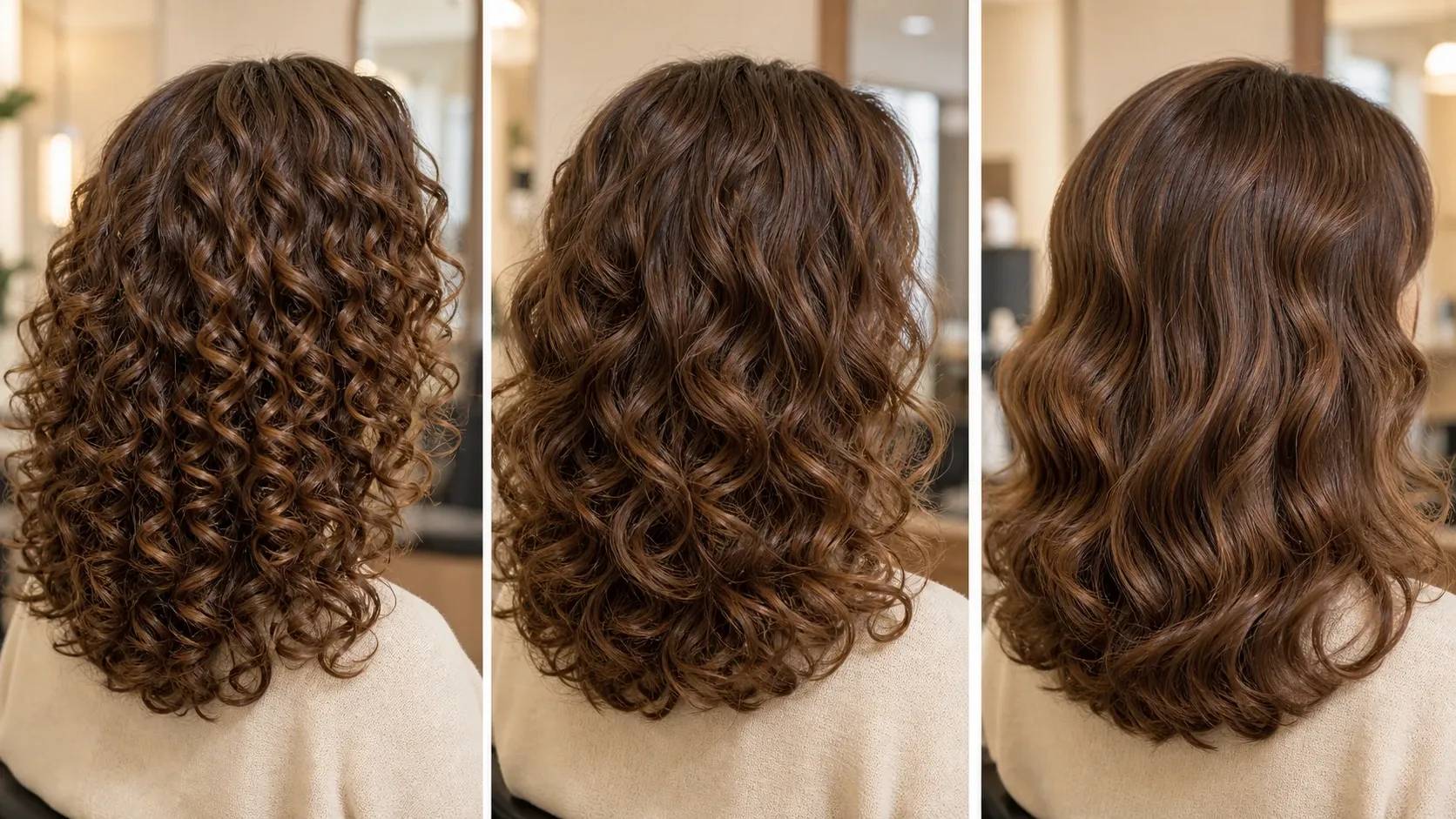
Perm comparison
| Type | Longevity | Stress on hair | Result |
|---|---|---|---|
| Classic | Up to 6 months | High | Springy, defined curls |
| Bio perm | 2–4 months | Medium | Soft, natural curls |
| Wave perm | 2–4 months | Medium | Relaxed waves |
| Root volume | 2–3 months | Medium, roots only | Volume at the roots |
Who it suits and who should wait
A perm sits well on healthy, non-over-dried hair. It adds volume to fine hair and disciplines frizz-prone hair. But heavily bleached, recently blonde-coloured or damaged hair is a reason to be careful: the formula may take unevenly and finish off weakened length. In those cases the stylist will suggest restoration or a gentle bio perm first.
Caring for hair after a perm
Permed hair needs hydration and gentle handling:
- don't wash your hair for the first 2–3 days — the shape needs to set;
- use products for curly hair and hydrating masks;
- dry with a diffuser or naturally, scrunching the strands with your hands;
- avoid frequent flat-ironing — it weakens the curl;
- trim the ends regularly, they wear out faster.
A perm gradually straightens as the hair grows and the formula washes out — that's natural. You can refresh it once the roots have grown out noticeably, usually every few months.
If you're thinking about a perm but unsure of your hair's condition, start with a consultation. The stylist will assess the structure and suggest which type suits you without harming the length.