Grey Hair Coverage for Men and Women

Author
Valeria
Grey hair coverage solves a delicate task: making grey hair less noticeable without going into dense, flat single-tone colour. Grey appears in everyone sooner or later, but not everyone wants to cover it "to zero" — for some, keeping things natural matters more. Let's break down how grey hair coverage works for men and women and how it differs from ordinary colouring.
Grey hair coverage: what it is and why
Coverage here means gentle toning that mutes grey rather than covering it densely. Instead of a sharp switch to flat colour, it partially darkens the grey strands while keeping a natural play of shades. The result looks as if there's simply less grey — with no "dyed head" effect.
If you want an even but natural result, at Trueman it's done as part of the single-tone hair color service — the stylist selects the formula and shade for your percentage of grey and your base.
How coverage differs from full colouring
Full grey colouring uses permanent dyes that cover grey hair densely and give an even, flat tone. It's reliable but needs regular root correction and looks more "flat." Coverage works more softly — often with milder or demi-permanent formulas that wash out gradually and leave no sharp regrowth line, a true grey blending effect.
| Criterion | Grey coverage | Full colouring |
|---|---|---|
| Coverage | Partial, natural | Full, dense |
| Longevity | Medium, fades softly | High |
| Regrowth line | Barely visible | Visible |
| Correction frequency | Less often | Every 3–4 weeks |
| Effect | Natural | Even, flat tone |
Grey hair coverage for men
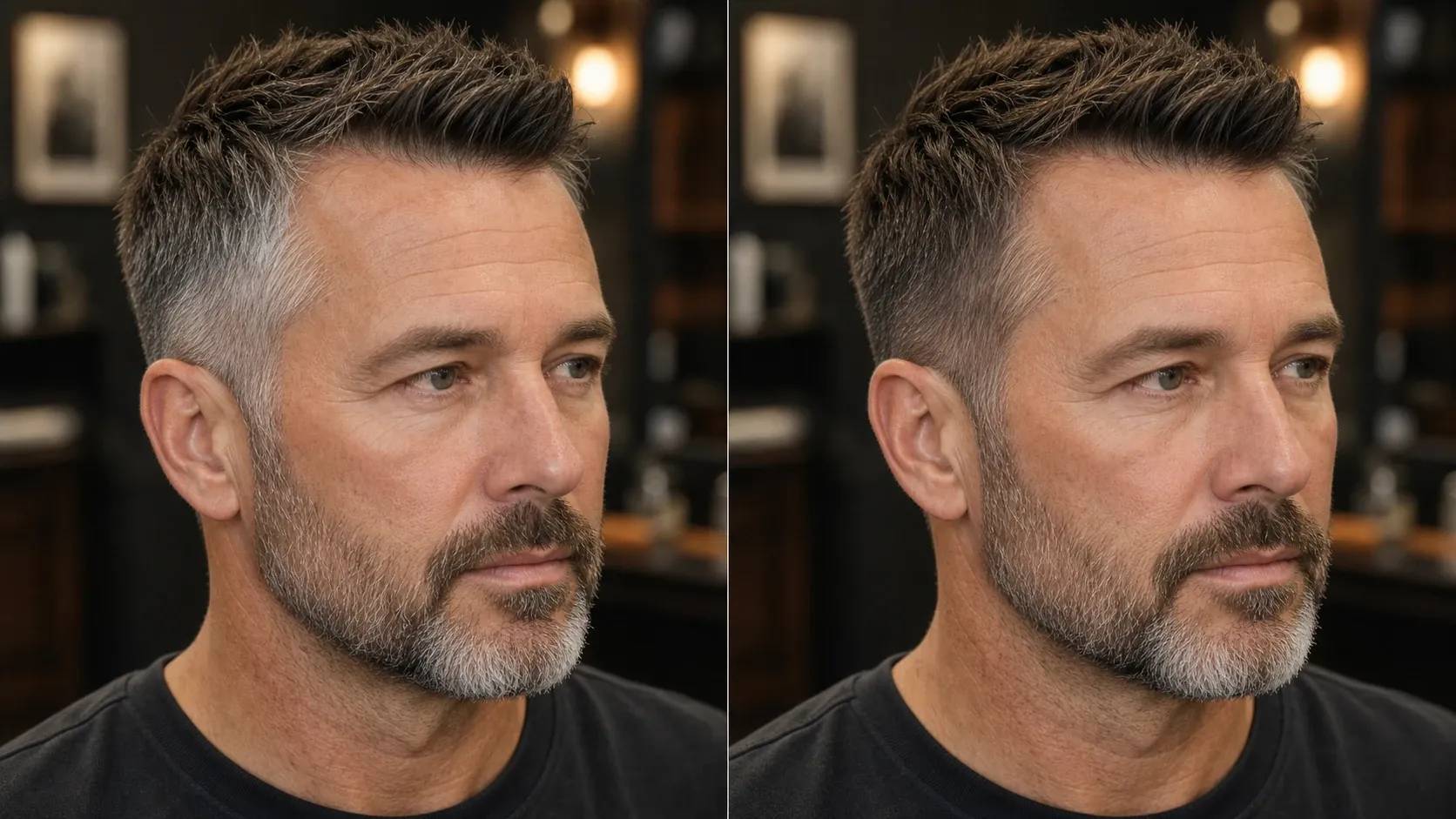
Men most often want naturalness above all — so that no one notices any colouring happened. That's why men's coverage is done quickly and delicately: the formula is left on for less time than in women's colouring, and a shade slightly lighter than natural is chosen to avoid a "drawn-on" effect. Often it's not the whole head but the temples and beard, where grey shows most, that get covered. The result — a few years off and no sense of "dyed" hair.
Grey hair coverage for women
Women have more to juggle: grey can be distributed unevenly, and the base colour is often already coloured. Here it's important to match the tone and account for the percentage of grey — the more there is, the denser the formula needed. With a little grey, gray blending through highlights or a colour stretch works well: light strands mask the grey naturally and regrowth is barely visible. With significant grey, a more durable but still soft single-tone colouring is chosen.
How to care for the result
To make coverage last longer and not fade:
- use shampoo and conditioner for coloured hair;
- don't wash your hair in very hot water — it flushes pigment out faster;
- add nourishing masks, as grey hair is often coarser and drier;
- refresh the toning as it washes out, usually every 4–6 weeks.
One important point: grey hair has a denser structure and takes pigment less readily, so covering grey hair at 100% is a job for a stylist, not a home dye — especially when there's a lot of grey and you want a natural rather than flat result.
The best way to know which option is yours — dense colouring, soft coverage or masking through highlights — is to come in for a consultation. The stylist will judge the percentage of grey and the base colour and pick an approach where the grey disappears from view while the hair looks living and natural.