Airtouch: What It Is and Who It Suits

Author
Valeria
Airtouch is one of the most sought-after complex colouring techniques of recent years. The name airtouch coloring literally translates as "a touch of air," and that's no marketing: the stylist quite literally blows the short, weak hairs out of a strand with a dryer and lightens only the long ones that remain. This produces a delicate, very soft colour stretch with no harsh regrowth line. Let's break down what airtouch is, who it suits and how it differs from ordinary highlights.
Airtouch coloring: what it is and how it's done
The essence of the technique is in selecting the strands. The stylist takes a thin strand, directs the dryer's airflow at it, and the light vellus hairs separate from the main mass. Lightener is applied to the remaining hair, kept away from the roots. Because not the whole strand is lightened, the border between dark and light comes out extremely blurred — there's no sharp line of regrowth.
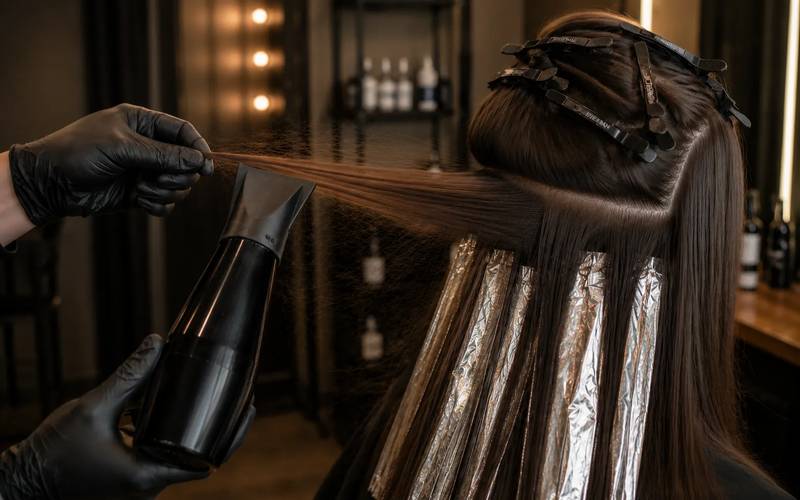
It's painstaking handwork: a session can take several hours, since the stylist treats each strand separately. That's exactly why airtouch is classed as a complex technique. At Trueman it's done as part of the airtouch hair coloring service — with a prior assessment of hair condition and selection of the final tone.
How airtouch differs from classic highlights
In ordinary highlights the strand is lightened in full, from a backcombed or root section. In airtouch only part of the hair in a strand is worked, so the transition is softer and regrowth is almost invisible. Another difference is the time and skill involved: airtouch is harder and pricier, but the result is more natural and looks more "expensive."
Who airtouch suits
Airtouch is a very flexible technique and suits most people. But there are nuances.
- Dark hair. On a dark base airtouch is especially striking — soft light highlights on a deep background. Sometimes more than one session is needed to reach a clean light tone with no brassiness.
- Light and medium brown hair. A great option for gentle brightening and dimension without harsh contrast.
- Grown-out roots. If you're tired of touching up roots every month, airtouch is exactly that: the stretch lasts a long time.
- Fine hair. A colour stretch adds visual volume and depth, so it flatters fine hair.
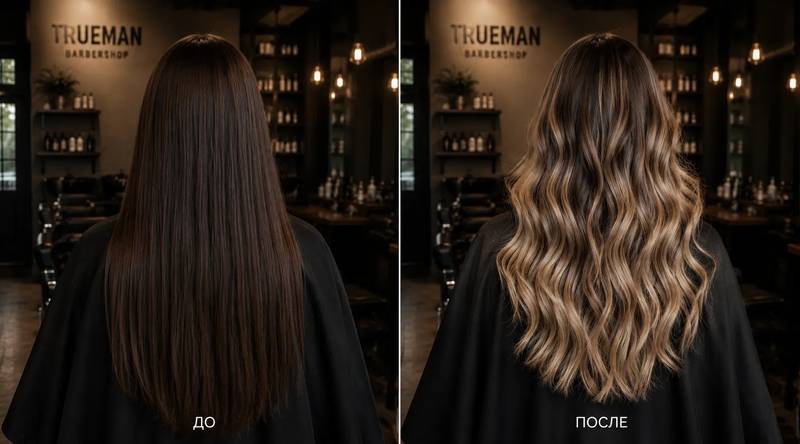
Who should be more careful: anyone with heavily damaged, over-dried or recently permed hair. Lightening is always a stress, and on weakened length the result may disappoint. In those cases the stylist will suggest restoration first rather than lightening at any cost.
How long it lasts and how to care for it
Airtouch's main advantage is longevity. Thanks to the soft transition, regrowth doesn't create a coarse border, so correction is usually needed every 3–5 months rather than monthly. Between sessions it's enough to maintain the tone.
To keep the colour stretch looking fresh:
- use products for coloured hair;
- every 7–10 days apply a toning (purple) treatment if you went cool blonde — it neutralises brassiness;
- don't skip heat protection before styling;
- every couple of weeks do a nourishing or restorative mask on the length.
Is airtouch worth it
If you want a natural, expensive-looking colour with minimal root upkeep and you're ready to invest the time in a session, airtouch is a great choice. It's not the fastest or cheapest technique, but the result earns its keep: a soft colour stretch that grows out beautifully and doesn't demand constant salon visits — a true color melt effect.
The best way to know whether airtouch suits you is to come in for a consultation. The stylist will assess your base, texture and hair condition and honestly say whether the intended tone is achievable in one session or will take several.