Taper Fade and Low Taper Fade: What They Are

Author
Azar
If you've heard the term taper fade but aren't quite sure how it differs from a regular fade, this one's for you. A taper fade is a soft, subtle blend of length around the temples and neck — the most versatile way to work the sides in a men's cut. It's tidy, works for the office and the weekend alike, and it's exactly where we suggest starting your fade journey. You can get one as part of a regular men's haircut — no separate service needed.
What a taper fade is
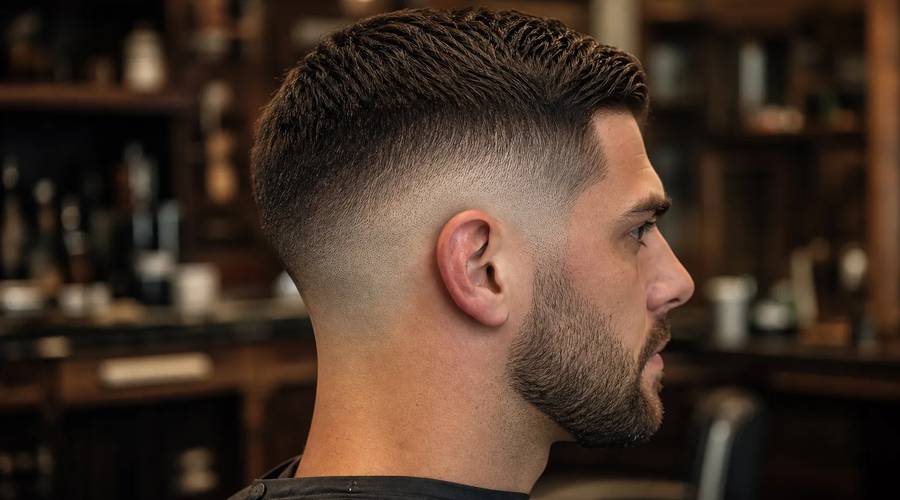
The word taper means "to narrow," and that's exactly the idea: the hair gradually shortens toward the edge of the cut — at the temples, around the ears and along the neckline. Unlike a full fade, a taper doesn't have to go down to skin; more often it simply blends the length away, leaving a light shadow.
The main perks of a taper fade:
- looks neat without being radical;
- works with any length on top;
- grows out gracefully with no harsh lines;
- fits any setting — from a meeting to a party.
Low taper fade
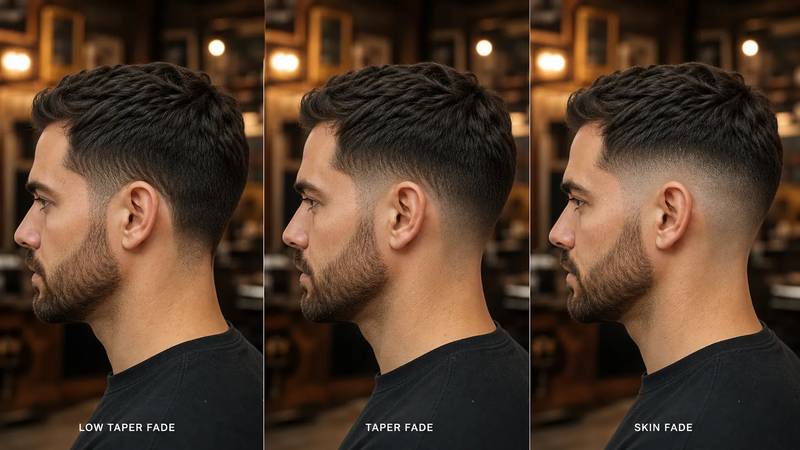
The low taper fade is the most delicate version. The word low means the blend starts low, right at the hairline, while the bulk of the sides stays untouched. From a distance the cut looks classic, and only around the temples and neck do you notice the barber's careful work.
People choose this version when they want freshness and clean lines but no contrast. A low taper fade forgives a lot: it looks equally good slicked back, with a part or with a textured style.
How a taper fade differs from a skin fade
To keep the terms straight, let's compare the main blend types.
| Type | Where the blend starts | How short the bottom goes | Contrast |
|---|---|---|---|
| Low taper fade | At the hairline | A short shadow | Minimal |
| Taper fade | Just above the temples | Very short length | Moderate |
| Skin fade | High on the sides | Down to bare skin | Maximum |
In short, a taper is about softness, while a skin fade is about graphic sharpness.
Other fade variations
A few related shapes have grown up around the taper fade that are worth knowing.
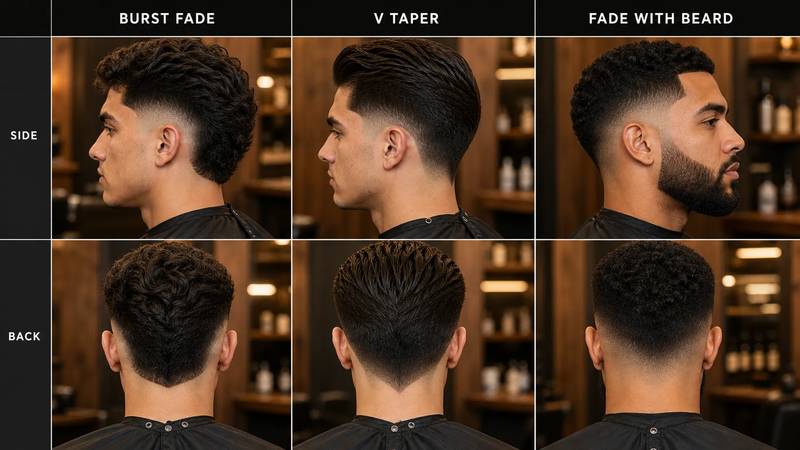
- Burst fade — the blend "fans out" in a semicircle around the ear, while the back stays longer. A favourite for textured styles and mullets.
- V taper — the back is shaped into a point, a letter V, instead of the usual straight or rounded line. A small detail that adds character.
- Fade with beard — a fade that flows smoothly into the beard with no harsh line at the jaw. The barber "connects" the sides of the head with the beard line, and the whole look becomes seamless.
Who a taper fade suits
The taper fade is that rare cut that suits almost everyone. Still, there are nuances.
- Fine hair — a taper and low taper create a sense of tidiness without exposing skin.
- Thick, coarse hair — you can go for a more pronounced blend with confidence.
- First time with a fade — start with a low taper fade; it's hard to overdo.
- Got a beard — ask for a fade with beard so the hair and beard read as one.
How to look after it
The key thing about any fade is that it needs consistency. A soft taper fade holds a tidy look longer than a skin fade, but every 3–4 weeks the blend is worth refreshing, or the line grows in and loses its crispness. Otherwise upkeep is simple: wash as needed and style the top with a matte paste or just your fingers. In the Batumi heat a light matte paste works best — it holds shape and doesn't "slide" in the humidity.
If you're unsure which blend to pick, tell your barber about your lifestyle and how often you visit. For rare visits a low taper fade is the better fit; for always looking fresh, a classic taper. From there you can experiment with a burst fade or V taper whenever you want something new.