Beard Styles: How to Choose Yours by Face

Author
Andrey
A beard stopped being just "didn't shave" a long time ago — today it's a deliberate part of your look, and there are so many beard styles it's easy to get lost. In this guide we'll break down the main styles — from light stubble to an imposing viking beard — and help you choose yours based on your face shape and how your hair grows. And to nail the idea, a professional beard trim and shave will build and clean up the shape for you.
What a beard's shape depends on
Before picking a style, honestly assess three things: how densely your hair grows, your face shape, and how much time you're willing to spend on upkeep. A full beard on patchy growth will look untidy, and complex geometry demands regular correction. The good news: there's a shape for every growth pattern.
The main beard styles
Let's go through the popular styles from shortest to fullest.
Stubble
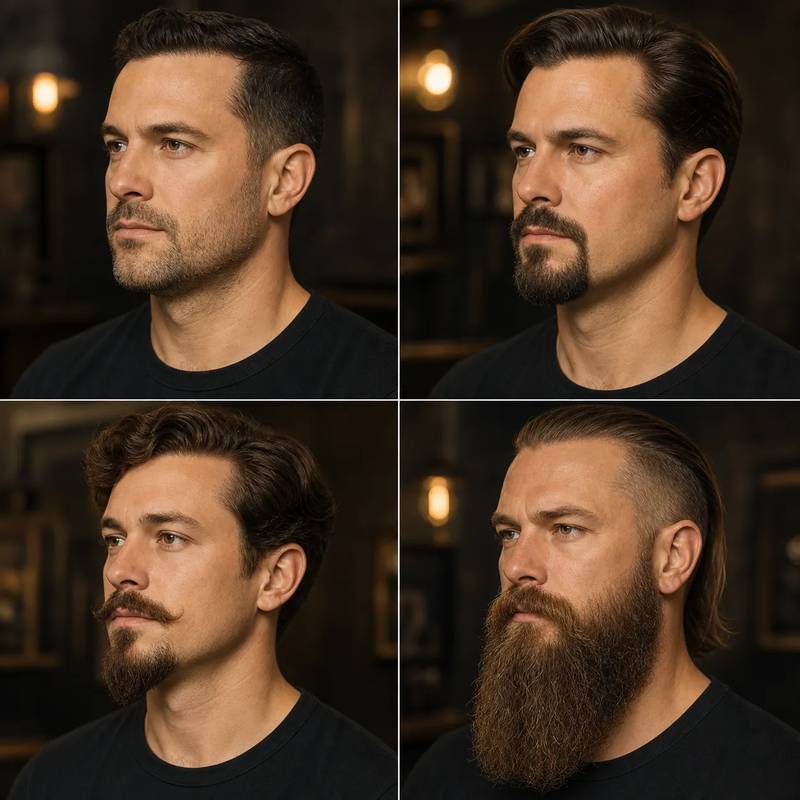
Stubble is a neat, short growth of 1–4 mm. It suits almost everyone, hides minor skin imperfections and needs little care — a trimmer with a guard is enough. The perfect option for anyone who wants a beard but isn't ready to commit.
Goatee
A goatee is hair concentrated around the chin, without connecting to the sideburns. The shape visually lengthens the face, so it looks especially good on round and square types. There are many goatee variations — from tiny to full.
The van dyke
This classic European style pairs a chin beard with a moustache, often joined into a neat ring around the mouth. It looks elegant and a little aristocratic, and suits a business look.
Viking beard
A viking beard is a long, dense and powerful beard in the Scandinavian spirit. It needs good growth and serious care: oils, a comb, regular trimming. In return the look is rugged and memorable.
How to match a shape to your face
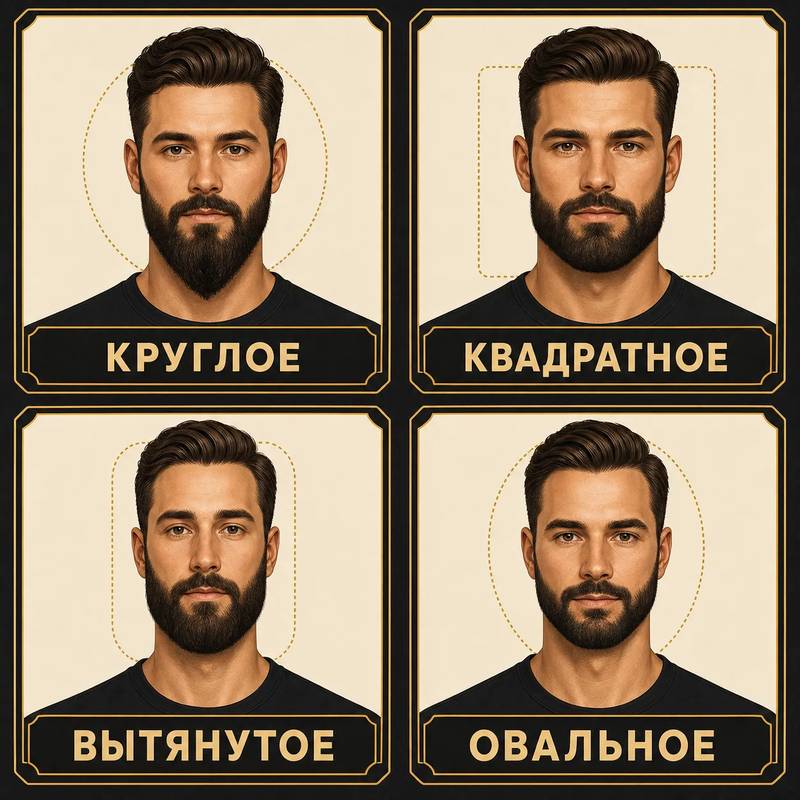
The core principle — the beard should balance your facial proportions.
| Face shape | What suits | What to avoid |
|---|---|---|
| Round | Goatee, a beard with chin elongation | Full sides and rounded lines |
| Square | Stubble, a short beard that softens the angles | Sharp straight outlines |
| Long | Fuller sides, moderate length below | A long beard that stretches the face |
| Oval | Almost any shape | — |
The oval face is considered the most versatile — you can experiment freely with it.
Beard shaping
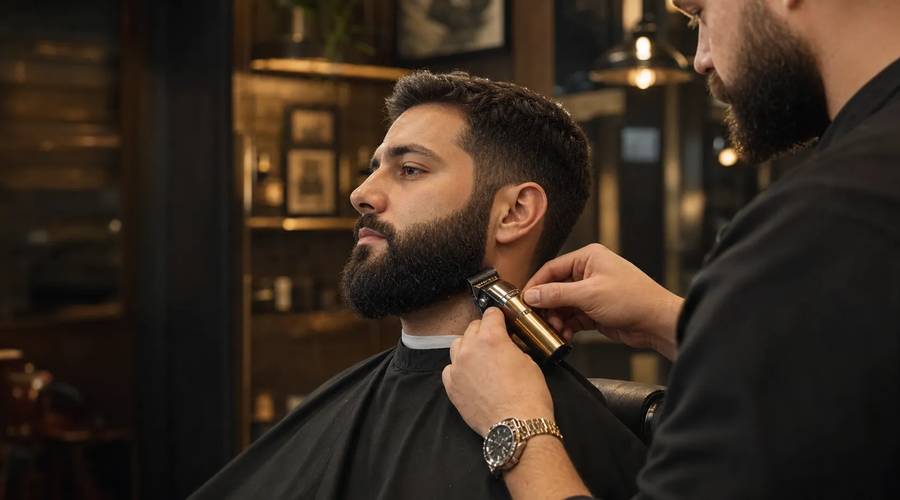
The most common mistake is trying to build a clean line yourself. That's exactly why beard shaping exists: the barber defines the right borders (the cheek, neck and jawline), sets the shape to your face and removes the excess so the beard grows in neatly for several more weeks.
What professional shaping includes:
- defining and drawing the outlines;
- trimming the length across the whole mass;
- shaping the neck and cheek lines;
- a finishing touch — oil or balm.
The first shape is almost always worth trusting to a barber, and after that you maintain it at home between visits.
Upkeep between visits
Any beard style only stays tidy with regular care. The basic minimum is simple:
- wash the beard with a dedicated shampoo 2–3 times a week;
- apply oil or balm daily to soften the hair and skin;
- comb along the growth with a comb or brush;
- refresh the outline at the barber every 3–5 weeks.
Choosing a shape is a dialogue: tell your barber about your lifestyle and the mood you're after, show a couple of references, and they'll pick a style that grows in well and highlights your own features.